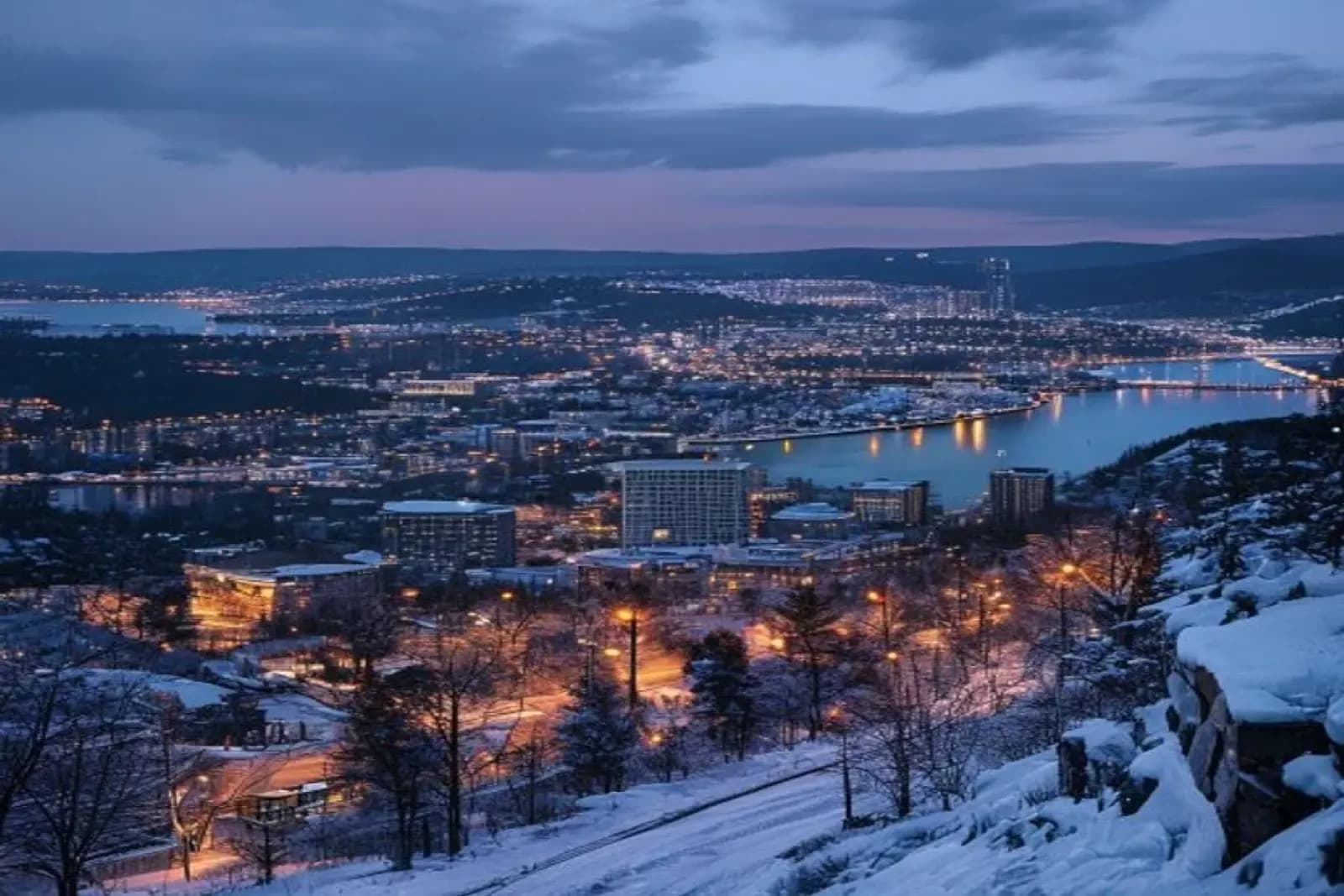
Ice Melt in Kelowna, BC.
Kelowna sits in a rain-shadow bowl — Highway 97 hill climbs flash-freeze every December, so commercial pre-treating starts before 04:00. Okanagan valley inversions trap freezing fog that glazes sidewalks; deicer demand spikes during week-long ice-fog events. Winters here mix freeze-thaw weeks with hard cold snaps, so ice and pack are bigger factors than raw snow volume — and lots are large and drive-times between properties dominate routing. The local economy leans on UBC Okanagan, Interior Health, and Kelowna Airport, which means our routes pre-treat UBC Okanagan's sites before residential bookings whenever a storm is forecast inside their shift change.
Kelowna winter: the data behind the route
- Annual snowfall: 75 cm typical (moderate band)
- De-icer cutoff: rock salt above −12 °C, calcium chloride below
- Response SLA: ≤ 4 hours from trigger
- Plowing trigger: 3 cm accumulation
- Winter temperature: -2 °C average (mild baseline)
- Inland factor: deep-cold reserve unit hot at the Mission depot, winterised diesel blend below −20 °C
Why ice melt in Kelowna?
Ice Melt stocked at the Kelowna depot. Lot-traceable, AMS-2014 compliant where applicable. Order by 14:00 for same-day pickup; freight to surrounding counties moves on our route trucks.
Where we cover in Kelowna
- Neighbourhoods: Downtown, Mission, Glenmore, and Rutland
- Postal coverage: every postal-code unit inside the city limits
- Outlying districts: same-day for accounts within 30 km of the Kelowna depot
How we route Kelowna
- Dispatch density: satellite-city routing
- Priority routes: Interior Health, Kelowna Airport on a separate route book — Mission and Glenmore contracts never wait behind residential queues
- Unit replacement target: < 45 minutes during storm events (tier-D priority)
- Local depot crew: lives in Kelowna, knows the streets, named in your dispatch record — not a national call centre