Skip to content
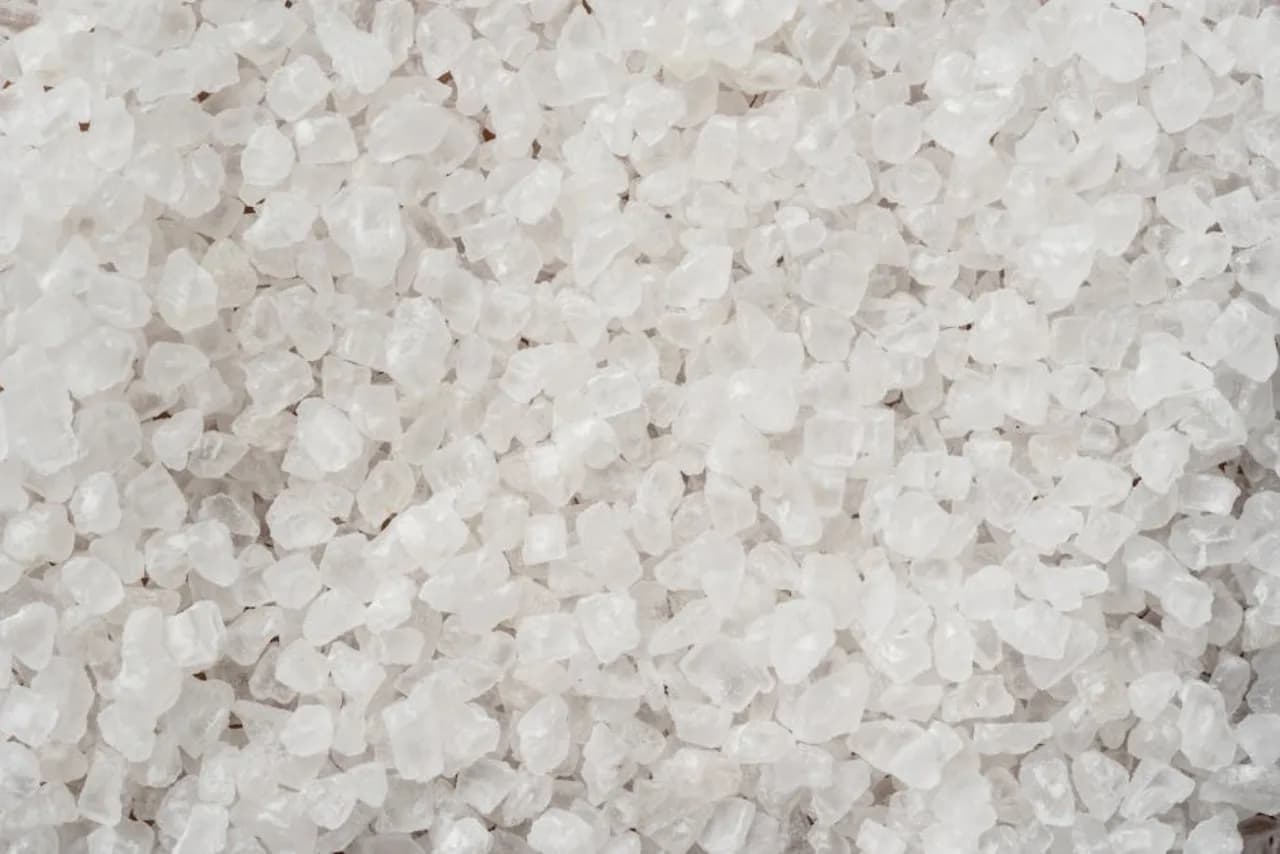
Bulk highway-grade rock salt crystals in macro view — coarse sodium chloride de-icer stockpile for Canadian commercial and municipal snow.ca accounts.
Home/Supplies/Rock Salt
Supplies · catalog

Rock Salt.

Composition
Sodium chloride (NaCl) 95%+ purity
Gradation
6.3 mm – 12.5 mm crystal
Effective to
–10 °C straight; –25 °C treated
Application rate
4–8 lb / 1,000 sq ft
Packaging
Bulk truck · 1 t tote · pallet · 20 kg bag
Standards
AMS‑2014 · ASTM D632
Price range
$180–$420 per tonne
Sources
Compass Minerals · K+S Windsor · Cargill
Key takeaways

Read in 20 seconds.

FAQPage · Schema marked
  1. 01Highway-grade rock salt (NaCl 95%+) for commercial and municipal Canadian de-icing.
  2. 02Effective to –10 °C; switch to treated blends or calcium chloride below that.
  3. 03Bulk truck, tonne tote, pallet, 20 kg bag — next-day from Mississauga / Laval / Edmonton / Surrey.
  4. 04$180–$240 per tonne bulk, $320–$420 per tonne in 20 kg bags; treated salt 15–40 % premium.
  5. 05Safe for cured sealed concrete at spec application rates; use CMA on first-season decorative concrete.
Catalog

Highway-grade rock salt (sodium chloride) for Canadian commercial and municipal de-icing — bulk truck, tonne tote, pallet, and 20 kg bag. AMS‑2014 certified, lot-traceable, treated and untreated.

Rock salt — sodium chloride, NaCl — is the backbone of Canadian winter de-icing. We supply highway-grade rock salt from Compass Minerals (Goderich, ON), K+S Windsor Salt, and Cargill to operators across all ten provinces.

What is highway-grade rock salt?

Mined sodium chloride meeting AMS-2014 (American Public Works Association) and ASTM D632 specifications:

  • Purity: minimum 95 % NaCl
  • Gradation: 6.3 mm – 12.5 mm crystal
  • Moisture: below 1 % at delivery
  • Documentation: lot-traceable certificate with every shipment

At what temperature does rock salt stop working?

Rock salt is effective on roads, parking lots, and driveways down to roughly –10 °C. Below that the melt rate drops off a cliff — at –18 °C straight rock salt melts about a quarter as much ice per kilogram as it does at –2 °C.

Pavement tempRock salt effectivenessRecommended product
Above –5 °CFull effectivenessStraight rock salt
–5 to –10 °CGoodStraight rock salt or treated
–10 to –20 °CFalling rapidlyTreated salt blends or calcium chloride
Below –20 °CFunctionally inertCalcium chloride pellets only

How much does bulk rock salt cost in Canada?

QuantityPrice per tonne
Bulk contracts (100+ t)$180–$240
Mid-volume (10–50 t)$240–$300
20 kg bag at pallet$320–$420
Treated salt blends+15–40 % premium

Pricing locks at season start (typically September 1) for fleet accounts on multi-year contracts.

Is rock salt safe for concrete?

Yes — pure sodium chloride at standard application rates (4–8 lb/1,000 sq ft) does not chemically damage cured, properly sealed concrete. The damage homeowners attribute to rock salt is almost always freeze-thaw spalling — melted brine refreezes in concrete pores, expands, and chips the surface.

Can rock salt damage grass or plants?

High sodium chloride concentrations cause die-back along driveway edges and around storm-drain catchments. The threshold for visible turf damage is 2,000–3,000 ppm sodium in the root zone.

Mitigation:

  • Apply at spec rate (4–8 lb / 1,000 sq ft) — over-application is the dominant cause
  • Use drop spreaders near landscape beds (not broadcast)
  • Switch to potassium chloride or calcium magnesium acetate (CMA) for landscape-adjacent walkways

Is rock salt safe for pets?

All chloride de-icers (sodium, calcium, magnesium, potassium) cause paw irritation if dogs walk through fresh application. For pet safety, choose blends marketed as pet-safe — Safe Paw, Paw Thaw, Pet Friendly Ice Melter Plus use urea or propylene glycol formulations.

After any winter walk, wipe your dog's paws with a warm cloth.

Where can I buy bulk rock salt in Canada?

  • Bulk truck (20+ t): Compass Minerals (Goderich mine — largest salt mine in the world), K+S Windsor Salt (Pugwash, NS / Lindbergh, AB), Cargill
  • Pallet / 20 kg bag: Home Depot Canada, Lowe's, Canadian Tire, Rona, Costco Canada
  • Mid-volume (1–5 t): regional landscape-supply yard or snow-removal contractor with bulk capacity — 20–40 % below retail bag pricing

snow.ca holds supply contracts with all three majors and delivers to depots in every province with 24–72 hour lead time during the season.

Standards

What you can expect.

5 STANDARDS
01STANDARD
Photo-verified
Real photos before listing.
02NEW
Dealer-direct
New gear, factory warranty.
03TESTED
Operator-grade
Spec-checked for Canadian winters.
04LOCAL
Local pickup
Depots in 80+ cities.
05FLEXIBLE
Rental or buy
Day, week, season, or own.
Common questions

Asked & answered.

Otherwise, call 888-471-SNOW.

Where can I buy bulk rock salt in Canada?

For bulk truck quantities (20+ tonnes per delivery), the major Canadian sources are Compass Minerals from the Goderich, Ontario mine (the largest salt mine in the world), K+S Windsor Salt (Pugwash, Nova Scotia and Lindbergh, Alberta), and Cargill via cross-border supply from Cleveland, Ohio. We hold supply contracts with all three and deliver to depots in every province with 24–72 hour lead time during the season. For pallet and 20 kg bag quantities, Home Depot Canada, Lowe's Canada, Canadian Tire, Rona, and Costco Canada stock through the fall and winter. For mid-volume orders (1–5 tonnes) the right channel is a regional landscape-supply yard or a snow-removal contractor with bulk capacity — the price per tonne is 20–40 % below retail bag pricing.

What is the difference between treated and untreated rock salt?

Untreated rock salt is straight sodium chloride mined and screened to gradation. It activates the melt reaction by absorbing pavement moisture, then exothermically releases heat that melts surrounding ice. The reaction slows dramatically below –10 °C. Treated rock salt is pre-coated with a liquid de-icer — typically calcium chloride brine, magnesium chloride brine, or an organic-blend brine like beet juice or corn-syrup byproduct. The liquid coating starts the melt reaction the instant the salt hits the pavement, extends effective melt temperature down to –25 °C, reduces bounce-and-scatter, and cuts application rates by 20–35 %. Treated salt costs 15–40 % more per tonne but the lower application rate and wider temperature range usually make it the lower total cost per cleared square foot for commercial routes.

How much rock salt do I need per parking lot?

Standard commercial calibration is 4–8 lb of rock salt per 1,000 square feet of paved surface, with 6 lb being the most common middle-of-the-road rate. A 50,000 sq ft commercial parking lot at 6 lb per 1,000 sq ft consumes 300 lb (about 136 kg) per salt application. With a typical Canadian commercial route doing one pre-storm anti-icing pass and one post-storm de-icing pass per storm event, and 12–20 storm events per season in southern Ontario, southern Québec, and the Lower Mainland, that same 50,000 sq ft lot consumes 7–12 tonnes of rock salt per season. Properly calibrated salt spreaders cut total seasonal consumption by 25–40 % vs. visual estimation, which is why every spreader we sell ships with a calibration chart and the procedure to verify discharge rate.

Is rock salt safe for concrete and asphalt?

Rock salt does not chemically damage cured asphalt or properly sealed concrete at spec application rates. The damage homeowners attribute to rock salt is almost always freeze-thaw spalling — brine penetrates concrete pores, refreezes during the next cold snap, expands, and chips the surface. This is worse on concrete less than 12 months old, unsealed concrete, low-air-entrainment concrete, and aggregate exposed concrete. For new driveways and decorative concrete in the first season, switch to calcium magnesium acetate (CMA) or potassium acetate — both are non-chloride and do not cause freeze-thaw damage. For all other situations, standard rock salt with an annual penetrating concrete sealer is the right combination. Asphalt is generally unaffected by rock salt at any application rate.

Can rock salt damage grass, plants, or pets?

High concentrations of sodium chloride do damage grass, shrubs, and salt-sensitive landscape plants — typically as die-back along driveway edges and around storm-drain catchments where meltwater concentrates. The threshold for visible turf damage is roughly 2,000–3,000 ppm sodium in the root zone, which corresponds to repeated over-application or runoff pooling. Solutions: keep application rate at spec (4–8 lb / 1,000 sq ft), use drop spreaders not broadcast spreaders near landscape beds, and switch to potassium chloride or calcium magnesium acetate (CMA) for landscape-adjacent walkways. For pet safety, all chloride de-icers (sodium, calcium, magnesium, potassium) cause paw irritation if dogs walk through fresh application. Pet-safe ice melts marketed for residential use are typically urea or propylene glycol blends that do not crystallise on paws.

Continue exploring

Related routes.

ON
Rock Salt — Toronto
/toronto/rock-salt
ON
Rock Salt — Ottawa
/ottawa/rock-salt
ON
Rock Salt — Mississauga
/mississauga/rock-salt
ON
Rock Salt — Brampton
/brampton/rock-salt
ON
Rock Salt — Markham
/markham/rock-salt
ON
Rock Salt — Barrie
/barrie/rock-salt
Bulk highway-grade rock salt crystals in macro view — coarse sodium chloride de-icer stockpile for Canadian commercial and municipal snow.ca accounts.

Rock Salt — priced for Canada.