Skip to content
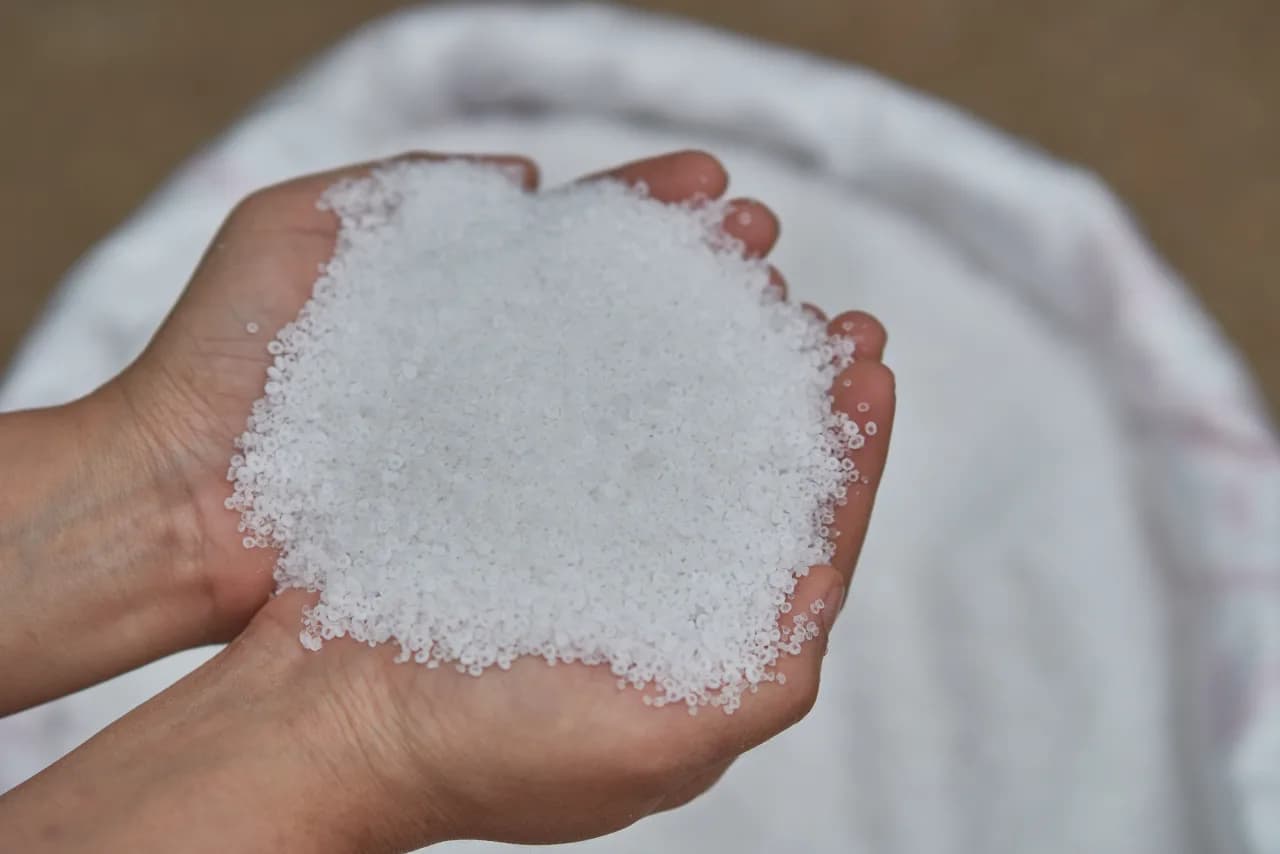
Open hands cupping a mound of white calcium-chloride de-icer pellets above the supply bag — strongest chloride de-icer effective to -32°C for Canadian deep-cold snow.ca commercial accounts.
Home/Supplies/Calcium Chloride
Supplies · catalog

Calcium Chloride.

Composition
Calcium chloride 94–97 % (CaCl2)
Effective to
–32 °C
Forms
Pellets (3–6 mm) · flakes · liquid 32–38 %
Application rate
2–4 lb / 1,000 sq ft dry; 8–12 gal / tonne pre-wet
Activation
Exothermic — releases heat on contact
Packaging
22 kg bag · 1 t tote · bulk tanker liquid
Price range
$700–$1,200 per tonne dry; $300–$480 per tonne eq. liquid
Brands
Peladow · Dowflake Extra · Liquid Magic
Key takeaways

Read in 20 seconds.

FAQPage · Schema marked
  1. 01CaCl2 is the strongest chloride de-icer in commercial use — effective to –32 °C and exothermic on contact.
  2. 02Pellets for dry broadcast; flakes for salt blending; liquid 32–38 % for pre-wetting and anti-icing spray.
  3. 03Application rate 2–4 lb / 1,000 sq ft (half of rock salt) at the cost of 3–5x rock salt per tonne.
  4. 04More aggressive on concrete and rebar than NaCl — switch to MgCl2 or potassium acetate for decorative work.
  5. 05Peladow and Dowflake Extra are the industry benchmark brands, stocked in 22 kg bag, tote, and bulk tanker.
Catalog

Calcium chloride pellets, flakes, and liquid (CaCl2) — the strongest commercially available chloride de-icer, effective to –32 °C, for cold-snap conditions, pre-storm anti-icing, and pre-wetting rock salt.

Calcium chloride (CaCl₂) is the most powerful chloride-based de-icer in commercial use. It activates the melt reaction exothermically — the chemical releases heat as it dissolves, with surface temperatures rising 4–8 °C in the first minutes of contact.

When should I use calcium chloride instead of rock salt?

Use CaCl₂ when:

  • Pavement temperature is below –10 °C (rock salt slows; CaCl₂ effective to –32 °C)
  • You need fast activation on a priority surface (hospital frontage, fire lane)
  • You are pre-wetting rock salt at the spreader
  • You need to anti-ice before a forecast storm

For routine de-icing above –10 °C, straight rock salt is more economical. CaCl₂ is the cold-snap and pre-wet tool.

How fast does calcium chloride work?

Surface temperatures rise 4–8 °C in 2–4 minutes as the chloride dissolves exothermically.

De-icerTime to visible melt at –15 °CTime to release 5–10 mm ice
Calcium chloride pellets< 5 minutes15–25 minutes
Treated rock salt10–20 minutes45–75 minutes
Straight rock salt30–60 minutes90–180 minutes

Does calcium chloride damage concrete?

CaCl₂ is more aggressive on concrete than sodium chloride at the same application rate because the exothermic reaction produces more meltwater faster, and more meltwater penetrates concrete pores.

  • Cured, sealed concrete in good condition — spec-rate calcium chloride (2–4 lb / 1,000 sq ft) does not cause more freeze-thaw spalling than rock salt
  • Decorative, stamped, exposed-aggregate concrete — accelerates surface damage, avoid
  • Concrete under 12 months from pour — use magnesium chloride, CMA, or potassium acetate instead

Concrete sealed annually with a quality penetrating sealer is largely protected from chloride attack regardless of de-icer choice.

Pellets vs flakes vs liquid calcium chloride — what's the difference?

  • Pellets (3–6 mm round granules) — standard for dry broadcast through a salt spreader. Cold-snap de-icing of lots, walks, roads.
  • Flakes (flat plate-shaped crystals) — more surface area per gram, dissolve faster. Used for blending with rock salt at the salt dome.
  • Liquid 32–38 % — used for pre-wetting dry rock salt at spreader discharge, anti-icing spray ahead of storms, dust control on gravel roads.

What does calcium chloride cost in Canada?

FormPrice
Pellets, 22 kg bag at pallet$700–$900 / tonne
Pellets, retail bag$850–$1,200 / tonne
Liquid 32 %, bulk tanker$300–$480 / tonne equivalent
Liquid 32 %, 1,000 L IBC$380–$580 / tonne eq
Liquid 32 %, 200 L drum$480–$680 / tonne eq

Which calcium chloride brands are available in Canada?

  • Peladow (Occidental Chemical) — 94–97 % CaCl₂ pellets, industry benchmark for cold-temp performance
  • Dowflake Extra (Dow Chemical / OxyChem) — leading flake product
  • Liquid Magic — 32 % brine standard for municipal pre-wet

Pallet, tote, and bulk tanker available through Univar Solutions, Brenntag, ChemTrade and Canadian regional distributors. 48–96 hour lead time during season.

Standards

What you can expect.

5 STANDARDS
01STANDARD
Photo-verified
Real photos before listing.
02NEW
Dealer-direct
New gear, factory warranty.
03TESTED
Operator-grade
Spec-checked for Canadian winters.
04LOCAL
Local pickup
Depots in 80+ cities.
05FLEXIBLE
Rental or buy
Day, week, season, or own.
Common questions

Asked & answered.

Otherwise, call 888-471-SNOW.

When should I use calcium chloride instead of rock salt?

Use calcium chloride when the pavement temperature is below –10 °C, when you need to anti-ice before a forecast storm, when you need fast activation on a high-priority surface (hospital frontage, fire-lane), or when you are pre-wetting a salt spreader. Below –18 °C straight rock salt melts about a quarter as much ice per kilogram as it does at –2 °C — calcium chloride is more than 3x as effective at the same temperature. The 3–5x price premium per tonne is offset by the lower application rate and the wider effective temperature window. For routine de-icing above –10 °C, straight rock salt remains the more economical choice; calcium chloride is the cold-snap and pre-wet tool.

How fast does calcium chloride work?

Calcium chloride activates the melt reaction exothermically — it releases heat as it dissolves — with surface temperatures rising 4–8 °C in the first two to four minutes of contact. Visible meltwater appears in under five minutes at pavement temperatures of ―20 °C, and a typical hard-pack ice layer of 5–10 mm is fully released from the pavement in 15–25 minutes. By comparison, straight rock salt at the same temperature takes 30–60 minutes to begin visible melt and 90–180 minutes to release the same ice layer. The speed advantage is why hospital campuses, emergency-service properties, and high-priority commercial accounts often standardise on calcium chloride for the perimeter of buildings and entrance walkways.

Does calcium chloride damage concrete?

Calcium chloride is more aggressive on concrete than sodium chloride at the same application rate because the exothermic reaction produces more meltwater faster, and more meltwater penetrates concrete pores. For cured, sealed concrete in good condition, calcium chloride at spec application rates (2–4 lb per 1,000 sq ft) does not cause more freeze-thaw spalling than rock salt. For decorative concrete, stamped concrete, exposed-aggregate concrete, and any concrete less than 12 months from pour, calcium chloride accelerates surface damage and should be avoided — use magnesium chloride (less aggressive), calcium magnesium acetate (non-chloride), or potassium acetate. Concrete sealed annually with a quality penetrating sealer is largely protected from chloride attack regardless of the de-icer chosen.

What is the difference between pellets, flakes, and liquid calcium chloride?

Pellets are 3–6 mm round granules used for dry broadcast application with a salt spreader. They are the standard for cold-snap de-icing of parking lots, walkways, and roads. Flakes are flat plate-shaped crystals with more surface area per gram — they dissolve faster but bounce more in spreaders and are typically used for blending with rock salt at a salt dome. Liquid calcium chloride brine at 32–38 % concentration is the form used for pre-wetting dry rock salt at the moment of discharge, for anti-icing spray applications ahead of a forecast storm, and for dust control on gravel roads in summer. The three forms are not interchangeable in equipment — a dry spreader cannot handle liquid, a sprayer cannot handle pellets.

Where can I buy calcium chloride in Canada?

Pallet and tote quantities of calcium chloride pellets ship through industrial chemical distributors — Univar Solutions, Brenntag, ChemTrade, and several Canadian regional players. We hold supply contracts and deliver to depots in every province with 48–96 hour lead time during the season. For 22 kg bag retail quantities, Home Depot Canada, Canadian Tire, and Rona stock Peladow and Dowflake Extra during the winter season. Liquid calcium chloride at 32 % concentration ships in bulk tanker, IBC (1,000 L tote), and 200 L drum from the same industrial distributors. Lead time on liquid is 5–10 business days during the season and longer in late October as municipalities top up salt-dome inventory.

Continue exploring

Related routes.

ON
Calcium Chloride — Toronto
/toronto/calcium-chloride
ON
Calcium Chloride — Ottawa
/ottawa/calcium-chloride
ON
Calcium Chloride — Mississauga
/mississauga/calcium-chloride
ON
Calcium Chloride — Brampton
/brampton/calcium-chloride
ON
Calcium Chloride — Markham
/markham/calcium-chloride
ON
Calcium Chloride — Barrie
/barrie/calcium-chloride
Open hands cupping a mound of white calcium-chloride de-icer pellets above the supply bag — strongest chloride de-icer effective to -32°C for Canadian deep-cold snow.ca commercial accounts.

Calcium Chloride — priced for Canada.