Skip to content
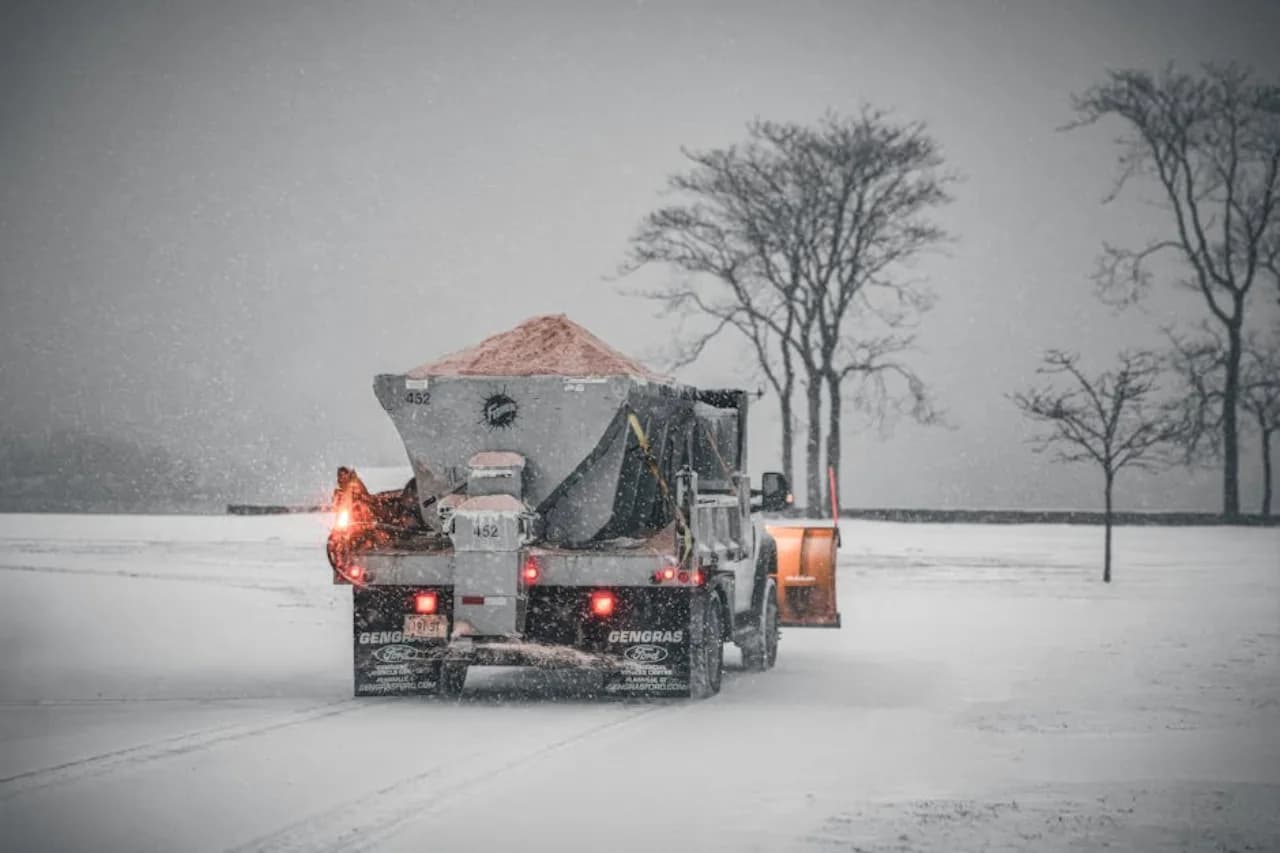
Salt spreader truck applying de-icing salt to a Canadian commercial parking lot — calibrated, documented.
Home/Services/De Icing
Service · Canada-wide

De Icing.

Products
NaCl · treated salt · CaCl2 · MgCl2 · CMA · potassium acetate
Application
Calibrated V-box · tailgate · walk-behind · boom spray
Standard rate
4–8 lb / 1,000 sq ft commercial; 12–16 lb ADA surfaces
Pre-treatment
24–6 hr before forecast (30–60 % salt reduction)
Temperature bands
Rock salt above –10 °C · treated blends –10 to –20 °C · CaCl2 below –20 °C
Documentation
Product · rate · timing logged per visit
Pricing
$0.005–$0.022 per sq ft per application
Insurance
$5M GL minimum · $2M E&O on documentation
Key takeaways

Read in 20 seconds.

FAQPage · Schema marked
  1. 01De-icing = chemical layer alongside mechanical clearing — every visit includes a documented application.
  2. 02Calibrated spreaders, not visual estimation — cuts salt spend 25–40 % vs. uncalibrated.
  3. 03Product matched to temperature: rock salt, treated blend, calcium chloride, or non-chloride.
  4. 04Pre-treatment brine cuts post-storm salt 30–60 % and speeds plowing 2–3x.
  5. 05Documented per visit (product, rate, timing) for slip-and-fall liability indemnification.
How it works

De-icing services — pre-treatment brine, post-storm salt, calcium chloride pellets, treated salt blends, and non-chloride alternatives. Calibrated application, documented per visit, ADA-compliant on regulated surfaces.

De-icing is the chemical layer that runs alongside mechanical snow removal — the application of chloride salts, brine, or non-chloride alternatives that melt residual ice and prevent ice formation. Every snow.ca snow removal visit includes a de-icing pass.

What is the difference between de-icing and anti-icing?

  • De-icing — applied to existing snow or ice to melt it after accumulation. Dry granular at 4–10 lb / 1,000 sq ft.
  • Anti-icing — applied to bare pavement before a storm to prevent ice from bonding. Liquid brine at 30–80 gallons per lane-mile.

Modern Canadian winter operations run both as an integrated program. Anti-icing ahead of forecast storms cuts post-storm de-icer use 30–60 %.

How much salt do you apply on my parking lot?

SurfaceProductApplication rate
Commercial parking lotRock salt4–8 lb / 1,000 sq ft (typical 6)
Same lot, treated saltTreated NaCl blend2–4 lb / 1,000 sq ft
Same lot, calcium chlorideCaCl₂ pellets2–4 lb / 1,000 sq ft
ADA-regulated stairs, rampsHigher density12–16 lb / 1,000 sq ft

Is your de-icer safe for my landscape and pets?

Standard rock salt at spec rates causes moderate damage to salt-sensitive landscape vegetation when meltwater concentrates along driveway edges. Threshold: 2,000–3,000 ppm sodium in root zone.

For pet safety, all chloride de-icers cause paw irritation if dogs walk through fresh application.

Solutions:

  • Drop-spreader application along landscape edges (no broadcast throw)
  • Pet-safe ice melt (Safe Paw, Paw Thaw) on residential walkways
  • Calcium magnesium acetate (CMA) or potassium acetate on landscape-adjacent and new concrete

How do you decide what de-icer to use?

Three variables: pavement temp, surface material, environmental constraint.

ConditionsProductRate
Above –10 °C, standard asphalt or cured concreteStraight rock salt4–8 lb / 1k sq ft
–10 to –20 °CTreated salt blends or calcium chloride2–4 lb / 1k sq ft
Below –20 °CCalcium chloride pellets only2–4 lb / 1k sq ft
New concrete first 12 monthsCMA or potassium acetatePer product spec
Wetland-adjacentMagnesium chloride or CMAPer product spec

Decision documented in dispatch record so the dispatcher and crew know the right product before arrival.

Why is documented salt application important?

Slip-and-fall claims average $340,000 per incident in Ontario and are the dominant liability driver in commercial snow operations.

The primary defence against a claim is documented evidence that the property was cleared and salted per contract specification at the time of the alleged incident.

snow.ca documents per visit:

  • Product used
  • Application rate
  • Timing of application
  • Pavement condition at application
  • Responsible crew member
80+
Cities served
≤ 4 hr
Response SLA
612
Storms cleared 2025
100%
FR + EN

What's included

  • +Plowing on each trigger event (≥ 2 cm).
  • +Pre-treatment brine when temperatures permit.
  • +Calcium chloride pellet ice control.
  • +Photo + GPS-stamped proof report within 30 min of completion.
  • +End-of-season haul-away (commercial accounts).

Standards

What you can expect.

SIX NON-NEGOTIABLES
01STANDARD
Insured & bonded
$5M general liability minimum.
02CA-WIDE
Storm-season response
Phones answered during winter season.
03LIVE
GPS-tracked
Every visit, every truck.
04PER VISIT
Photo proof
Time-stamped, geo-tagged, emailed.
05CERTIFIED
ISO-certified salt
Lot-traceable, AMS-2014.
06BILINGUAL
FR + EN service
Phone, chat, invoice — both.
Common questions

Asked & answered.

Otherwise, call 888-471-SNOW.

What is the difference between de-icing and anti-icing?

De-icing is the application of chemical de-icer to existing snow or ice to melt it after accumulation. Anti-icing is the application of chemical de-icer to bare pavement before a storm to prevent ice from bonding when snow begins to fall. The same chemical compounds are used for both jobs — sodium chloride, calcium chloride, magnesium chloride, organic blends — but in different forms and application rates. De-icers are typically dry granular at 4–10 lb per 1,000 sq ft. Anti-icers are typically liquid brine at 30–80 gallons per lane-mile. Anti-icing programs ahead of forecast storms cut total post-storm de-icer use by 30–60 % because mechanical clearing removes loose snow cleanly down to bare pavement instead of scraping bonded compacted ice. Modern commercial winter operations run both as an integrated program.

How much salt do you apply on my parking lot?

Standard commercial calibration is 4–8 lb of straight rock salt per 1,000 square feet of paved surface, with 6 lb being the most common middle-of-the-road rate. Treated salt blends apply at 2–4 lb per 1,000 sq ft because the liquid coating activates the melt at lower temperatures. Calcium chloride pellets apply at 2–4 lb per 1,000 sq ft. ADA-regulated surfaces (stairs, ramps, pedestrian entries) apply at 12–16 lb per 1,000 sq ft because pedestrian packing accelerates the melt reaction. Application is done with calibrated spreaders and verified discharge rate, not visual estimation. The actual amount applied on your specific lot on each specific visit is documented in the photo-proof report along with the product used and the pavement-condition assessment at application.

Is your de-icer safe for my landscape and pets?

Standard highway-grade rock salt at spec application rates does cause moderate damage to salt-sensitive landscape vegetation when meltwater concentrates along driveway edges or pools at storm drain catchments. The threshold for visible turf damage is roughly 2,000–3,000 ppm sodium in the root zone. For pet safety, all chloride de-icers cause paw irritation if dogs walk through fresh application. Solutions: drop-spreader application along landscape edges (no broadcast throw), pet-safe ice melt blends (Safe Paw, Paw Thaw) on residential walkways, calcium magnesium acetate (CMA) or potassium acetate on landscape-adjacent properties and new concrete. We document the product used in the per-visit proof report so you can specify your preference at signup and audit compliance over the season.

How do you decide what de-icer to use?

Three variables: pavement temperature at application, surface material, and environmental constraint. Above –10 °C on standard asphalt or cured concrete we use straight highway-grade rock salt at 4–8 lb per 1,000 sq ft. Between –10 °C and –20 °C we switch to treated salt blends (rock salt pre-coated with calcium chloride brine) or pure calcium chloride pellets at 2–4 lb per 1,000 sq ft. Below –20 °C we use calcium chloride pellets only — rock salt is functionally inert at those temperatures. For new concrete in the first year of cure, decorative concrete, or properties adjacent to wetlands or fish-bearing streams, we switch to calcium magnesium acetate (CMA) or potassium acetate regardless of temperature. The decision is documented in the dispatch record so the dispatcher and crew know the right product before arrival.

Why is documented salt application important?

Slip-and-fall claims average $340,000 per incident in Ontario and are the dominant liability driver in commercial snow operations. The primary defence against a claim is documented evidence that the property was cleared and salted per contract specification at the time of the alleged incident. snow.ca documents the product used, the application rate, the timing of application, and the pavement condition at application in the per-visit photo-proof report. In the event of a claim, this documentation is provided to insurance counsel as the indemnifying evidence. Commercial contracts with major retailers, hospitals, and government properties typically require this level of documentation as a contract specification — visual-estimation or undocumented salt application does not meet the standard.

Continue exploring

Related routes.

ON
De Icing — Toronto, ON
/toronto/de-icing
ON
De Icing — Ottawa, ON
/ottawa/de-icing
ON
De Icing — Mississauga, ON
/mississauga/de-icing
ON
De Icing — Brampton, ON
/brampton/de-icing
ON
De Icing — Markham, ON
/markham/de-icing
ON
De Icing — Barrie, ON
/barrie/de-icing
Quiet Canadian residential street at dawn covered in fresh winter snow — generic neighbourhood scene for snow.ca service-area context.

De Icing, anywhere in Canada.