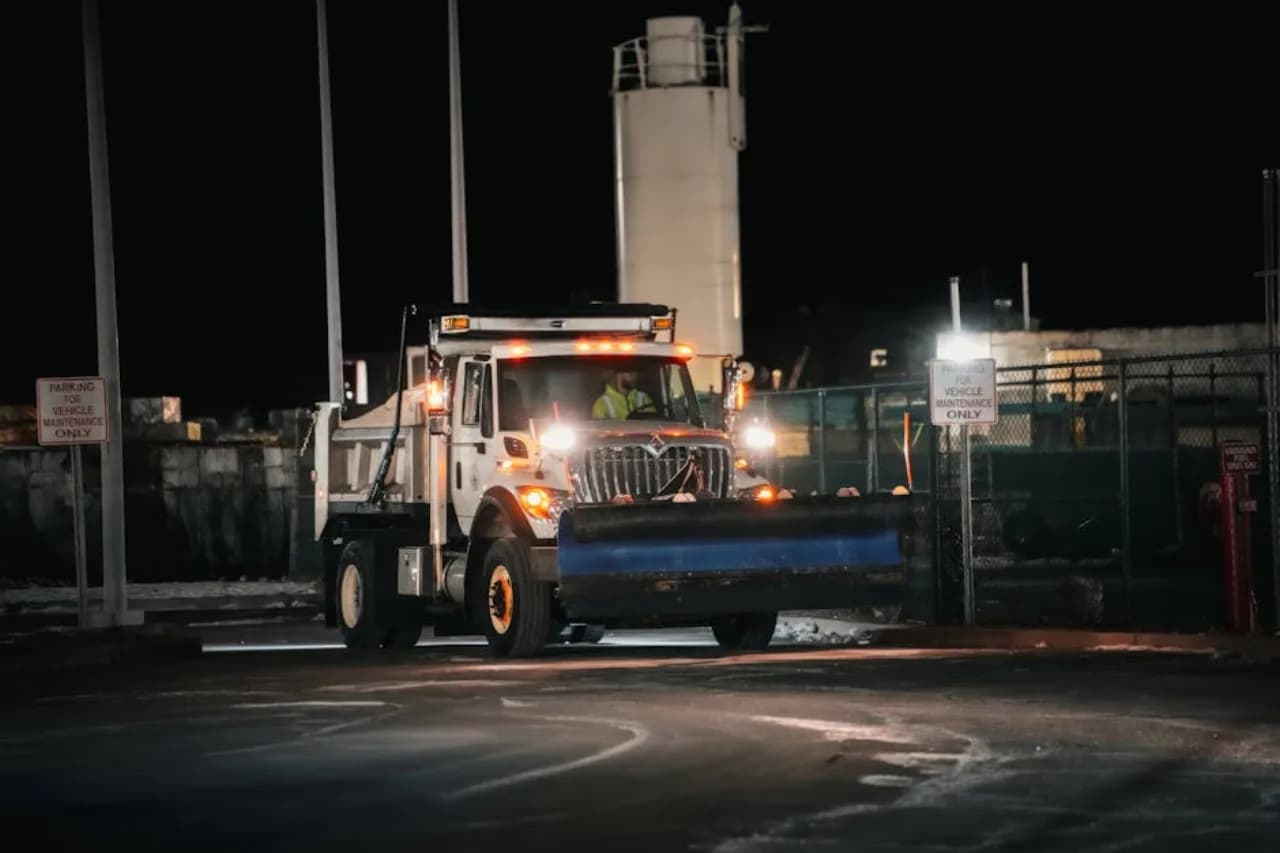
Policy 1 — Commercial General Liability ($5M)
$5M Commercial General Liability is the foundation of every Canadian snow contractor insurance package — required by virtually all commercial property contracts.
What $5M GL covers
- Third-party bodily injury from snow removal operations (slip-and-fall claims)
- Third-party property damage (lawn damage, vehicle damage, building damage from plow contact)
- Defence costs at the carrier's expense, in addition to policy limit
- Personal and advertising injury (defamation, contractual disputes)
Why $5M is the threshold
| Property type | GL requirement |
|---|---|
| Residential only | $2M minimum |
| Standard commercial | $5M required |
| Hospital, retail with high pedestrian volume | $5–10M |
| Municipal direct contracts | $5–10M |
| Major national retail / hospital networks | $25M+ |
Policy 2 — Slip-and-fall endorsement
Standard commercial GL excludes some completed-operations slip-and-fall claims unless a specific endorsement is added.
What the endorsement does
- Removes the "completed operations" exclusion for snow and ice work
- Extends coverage to claims arising after the snow visit was completed (typical timeline: claim filed 6–18 months later)
- Specifies the policy responds to slip-and-fall on documented service visits
Cost
Endorsement runs $800–$3,500 annual premium for a single-truck operator, scaling with route mix and claim history.
Policy 3 — Equipment floater
Snow plows, salt spreaders, skid-steer attachments, and other mounted equipment are not covered by standard commercial vehicle policies.
What needs separate coverage
- Snow plow mounted on truck ($4,500–$11,000)
- Salt spreader (V-box, tailgate, walk-behind: $250–$11,000)
- Snow pusher / blade attachments ($3,800–$14,500)
- Skid-steer attachments (varies)
- Brine sprayer / pre-wet kit
Coverage cost
| Equipment package value | Annual floater premium |
|---|---|
| Up to $25,000 | $400–$900 |
| $25,000–$75,000 | $900–$2,400 |
| $75,000–$200,000 | $2,400–$5,500 |
| $200,000+ | quoted individually |
- 01CGL $5M: $1,800–4,500/yr
- 02Slip-and-fall endorsement: $600–1,800/yr
- 03Equipment floater (2 trucks): $3,200–5,700/yr
- 04Commercial auto: $1,400–2,800/truck/yr
- 05Total minimum stack: ~$8,000–14,000/yr
Policy 4 — Commercial auto
Commercial vehicle insurance covers the trucks themselves and operator liability for vehicle operation.
Required coverage components
- Bodily injury / property damage — minimum $2M (industry standard for commercial snow trucks)
- Comprehensive — fire, theft, vandalism, weather
- Collision — damage from accident
- Uninsured / underinsured motorist — protects against under-covered third parties
Cost per truck
| Truck class + use | Annual premium |
|---|---|
| Half-ton with plow, owner-operator | $1,800–$3,400 |
| 3/4-ton with plow, owner-operator | $2,400–$4,800 |
| 1-ton with plow, employee-driven | $3,200–$6,200 |
| Tandem dump (municipal) | $5,500–$12,000 |
What kills a renewal — the four red flags
Most contractors get a renewal increase or non-renewal not because of one big claim, but because of patterns underwriters watch for during the 60-day pre-renewal review:
- No photo proof on file — underwriters increasingly require date-stamped, GPS-tagged photos of every commercial visit. “We sent the truck” is not a defence
- Claim frequency above industry average — even small claims (under $10k) trigger a soft-flag; three in two seasons usually means non-renewal in the snow line
- No written SLA on commercial accounts — verbal-only agreements are unenforceable in slip-and-fall defence; underwriters score it as elevated risk
- Salt rate inconsistencies — if your dispatch logs show “salted” but the property got 10 cm of snow on a bare lot, you have a documentation gap that opens you to bad-faith allegations
snow.ca crews avoid these because the platform enforces all four by default — photo proof per visit, written SLA per property, salt rate logged per application, and visit completion only when GPS confirms the truck reached the site.
When to bind, renew, or switch broker
Canadian snow insurance has a tight binding window:
- First bind — May through July is easy. August through October is tight. November is panic season; underwriters cherry-pick
- Renewal — start the conversation 90 days before expiry. Underwriters who feel rushed give worse terms
- Switching broker — mid-season switching is possible but loses pro-rated premium and creates a coverage-gap risk. Wait for renewal unless your current broker is non-responsive
- Mid-season add-on — if you take on a high-risk property mid-season (e.g., a hospital or high-rise residential), endorse the property to the existing policy rather than buying a new policy
Get three quotes every two years even if you’re happy. The Canadian snow market has tightened 18–24% in three years; the brokers who shop hardest still find 30%+ spreads for identical risks.
Questions, answered.
How much does snow contractor insurance cost in Canada?
A two-truck owner-operator with a clean record (no at-fault claims in the last 5 years, no premium increases on prior policy) budgets $8,000–14,000 per year for the full four-policy stack: commercial general liability with $2–5M aggregate, slip-and-fall endorsement (typically $1M sub-limit), inland marine for owned equipment (truck-mounted plows, salters, skid-steers), and commercial auto for the truck fleet. A solo operator with one truck and clean record budgets $4,500–7,200. A 10-truck commercial operator with mixed lots and one previous slip-and-fall settlement budgets $35,000–60,000. Premium varies by province (Ontario and Quebec run higher than the Prairies), revenue tier (commercial vs municipal), claim history, and the underwriter's view of your documentation discipline. Operators with per-visit GPS and photo documentation routinely save 15–30 % on CGL premium at renewal versus undocumented operations.
Can I use my homeowner's insurance to cover residential snow contracts?
No. Homeowner's insurance (HO-3 / HO-5 / HO-6 in Canadian Insurance Bureau classification) and personal auto policies explicitly exclude any commercial work — it is in the standard exclusions section of every Canadian residential policy, regardless of underwriter. The exclusion applies even if you are just plowing your neighbour's driveway for cash, the moment money changes hands the activity becomes commercial. A single claim filed under the wrong policy results in immediate policy cancellation, denial of the original claim, personal liability for the full damage amount (which on a slip-and-fall can be $340K+), and an industry-wide insurance black mark that follows you to every future quote. The same applies to using a personal auto policy for a truck-mounted plow operation. Get a proper commercial general liability policy before the first paid plow drop.
What does snow.ca crew insurance cover?
snow.ca routes are covered by the platform's $5M general liability policy and a $1M slip-and-fall endorsement on every visit, plus inland marine on all platform-owned equipment and commercial auto on the fleet. Crew operators working directly on the snow.ca platform (full-time or contractor-arrangement) do not need to carry their own CGL or slip-and-fall — the route insurance covers the property, the customer, and the third-party claimant. Independent contractor crews running a parallel non-platform book of business need to carry their own coverage for the non-platform work. The platform CoI is issued automatically on contract signing to the property manager, lists the property at the named-insured level, and is renewed annually without re-application. Workers' compensation (WSIB in Ontario, CNESST in Quebec, WCB in other provinces) is carried separately at the employee level, with rates ranging $2.50–6.00 per $100 of payroll depending on province and operator classification.
Who underwrites snow contractor insurance in Canada?
Common Canadian commercial underwriters that write snow-operator policies: Northbridge Insurance (largest writer of snow CGL nationally), Aviva Commercial (strong on multi-province portfolios), Intact Commercial Insurance (largest P&C insurer in Canada overall), Travelers Canada (preferred on larger commercial books), Wawanesa Mutual (competitive on Prairie operators), Economical (Western Canada focus), and Federated Insurance (specialised commercial-trades book). Specialist brokers with snow-ops desks: SnowTrades, FrostShield, CSE Insurance, Hub International's snow division, Marsh Canada's commercial-property practice. Quote from at least 3 brokers because premiums vary 40 % or more for identical coverage, and the gap is widest on first-time-buyer policies. Brokers with a dedicated snow-ops book understand the difference between residential-driveway risk (low) and parking-deck-commercial risk (high) and will price more accurately than a general commercial broker.