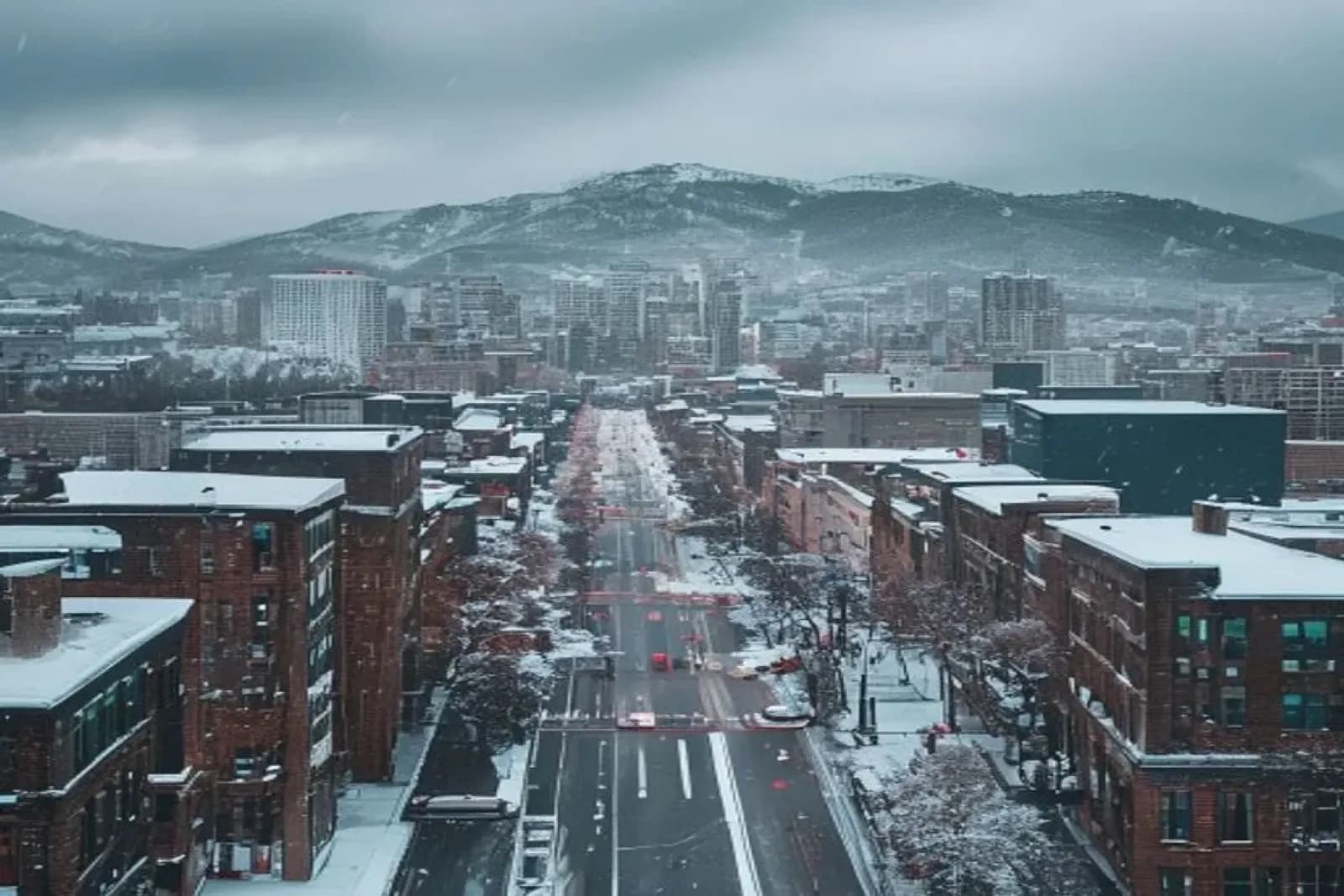
Why Surrey winter operations look different.
Surrey sprawls across 316 km² — a single storm can mean light rain in South Surrey and 15 cm of snow in Cloverdale on the same morning. Surrey's 568,322 residents, 45 cm of annual snowfall, winters averaging 4°C make this a city where winter arrives in handfuls of major events rather than steady accumulation.
Routes are built around Surrey's distinct districts — Whalley, Newton, Cloverdale, and South Surrey — each with its own driveway density, road-width profile, and salt sensitivity from boulevard trees. Surrey operations centre on the cul-de-sacs and curvilinear streets shape every routing decision pattern, which dictates equipment loadout (skid-steer vs truck-mounted vs walk-behind) per zone. The depot keeps commercial reference accounts on a dedicated dispatch queue — Surrey Memorial Hospital, KPU, and Coast Capital are on the recurring route.
Surrey operates under the BC Local Government Act with a 24-hour sidewalk window plus a 6-month municipal-property notice period for claims, and a tighter sodium chloride limit near drinking-water watersheds. Every visit is GPS-tracked, insured to $5M general liability, and photo-stamped before invoice.
Surrey runs as a Tier-C coverage zone — per-visit commercial dispatch via partner-crew network, seasonal residential routes through January-February, and centralised dispatch from the nearest depot. Storm-event commercial response averages 6 hours from a 2 cm trigger; residential service trips at 5 cm with morning completion. Property managers with portfolios spanning Tier-A and Tier-C cities get one contract covering both — same documentation, same billing.