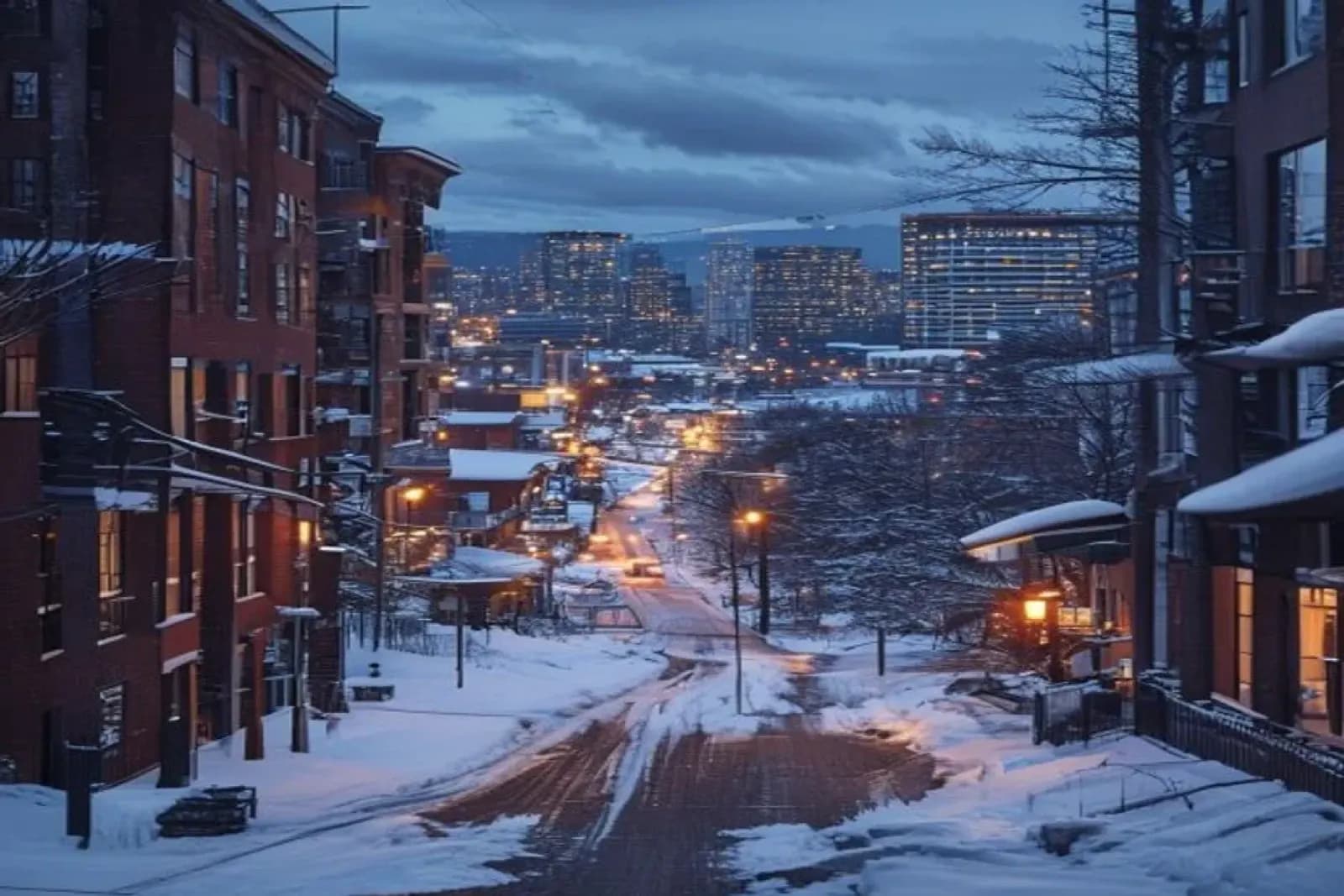
Why Langley winter operations look different.
Langley straddles the Fraser Valley snow line — the south slope of 200th Street routinely gets double the snowfall of the north. Langley's 132,603 residents, 50 cm of annual snowfall, winters averaging 3°C make this a city where winter arrives in handfuls of major events rather than steady accumulation.
Our Langley depot dispatches plows, salters, and roof crews across the metro and adjacent municipalities. Cul-de-sacs and curvilinear streets shape every routing decision, and routes are built around that. Routes are built around Langley's distinct districts — Walnut Grove, Willoughby, Fort Langley, and Brookswood — each with its own driveway density, road-width profile, and salt sensitivity from boulevard trees. Major sites including Trinity Western, Walnut Grove distribution, and Langley Memorial Hospital rely on contracted snow programs that meet British Columbia insurance and accessibility standards.
Langley operates under the BC Local Government Act with a 24-hour sidewalk window plus a 6-month municipal-property notice period for claims, and a tighter sodium chloride limit near drinking-water watersheds. Every visit is GPS-tracked, insured to $5M general liability, and photo-stamped before invoice.
Langley runs as a Tier-C coverage zone — per-visit commercial dispatch via partner-crew network, seasonal residential routes through January-February, and centralised dispatch from the nearest depot. Storm-event commercial response averages 6 hours from a 2 cm trigger; residential service trips at 5 cm with morning completion. Property managers with portfolios spanning Tier-A and Tier-C cities get one contract covering both — same documentation, same billing.