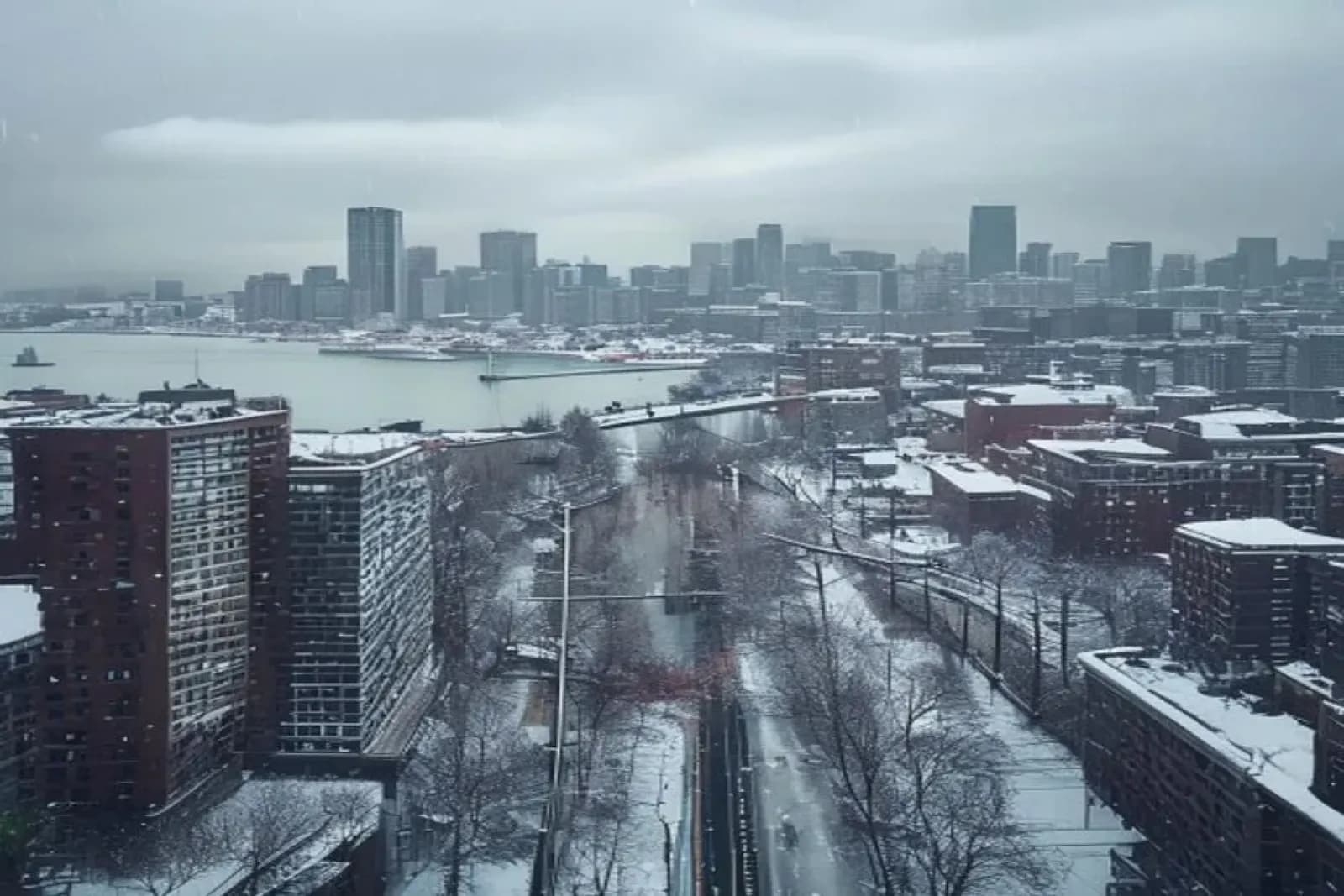
Inside Burlington winter: freeze-thaw, ice, and the operations behind a clean route.
Burlington's Aldershot rail-yard freight runs on a separate snow contract — train priority shapes how the rest of the city schedules its clearance. Burlington's 186,948 residents, 122 cm of annual snowfall, winters averaging -3°C make this a city where freeze-thaw weeks alternate with cold snaps, making ice and pack the bigger operational risk than raw snow volume.
Our Burlington depot dispatches plows, salters, and roof crews across the metro and adjacent municipalities. Cul-de-sacs and curvilinear streets shape every routing decision, and routes are built around that. Routes are built around Burlington's distinct districts — Aldershot, Tyandaga, Headon Forest, and Roseland — each with its own driveway density, road-width profile, and salt sensitivity from boulevard trees. Major sites including Joseph Brant Hospital, Cogeco, and Voortman Cookies rely on contracted snow programs that meet Ontario insurance and accessibility standards.
Burlington operates under the Ontario Occupiers’ Liability Act and the city’s 12-hour sidewalk-clearing bylaw from end-of-storm; contracted operators are documentation-liable for the cleared interval. Every visit is GPS-tracked, insured to $5M general liability, and photo-stamped before invoice.
Burlington runs as a Tier-C coverage zone — per-visit commercial dispatch via partner-crew network, seasonal residential routes through January-February, and centralised dispatch from the nearest depot. Storm-event commercial response averages 6 hours from a 2 cm trigger; residential service trips at 5 cm with morning completion. Property managers with portfolios spanning Tier-A and Tier-C cities get one contract covering both — same documentation, same billing.